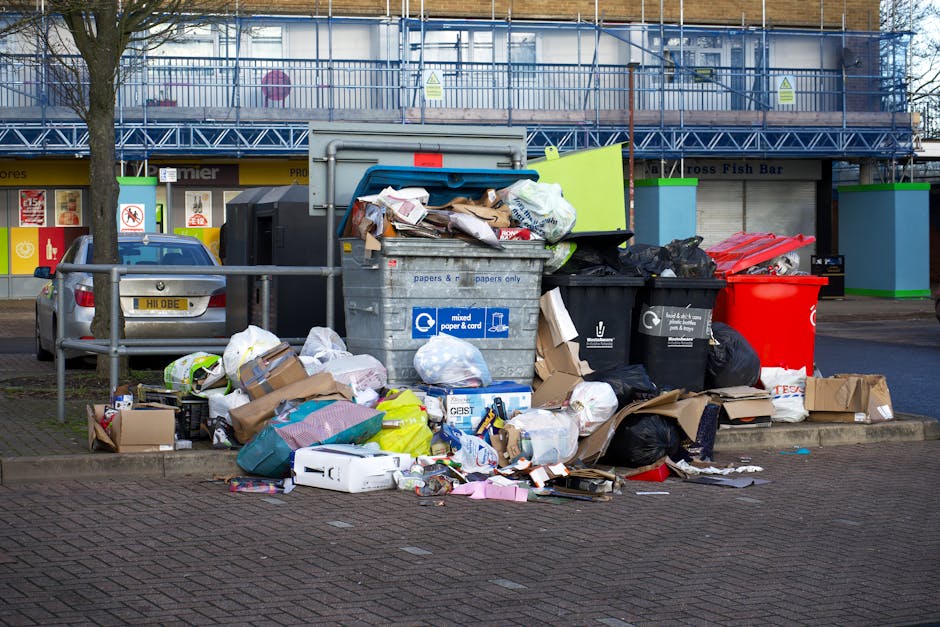
Forest Gate E7 rubbish collection guide for homeowners
If you are clearing out a loft, tackling a garden project, or finally dealing with that pile of old furniture in the hallway, this Forest Gate E7 rubbish collection guide for homeowners is here to make the job feel a lot less messy. Home rubbish removal sounds simple until you are staring at broken wardrobes, damp cardboard, hedge cuttings, a rusty bike, and a corner of "stuff" that somehow grew overnight. Sound familiar?
In this guide, you will learn how rubbish collection works for homes in Forest Gate E7, when to choose skip hire or a man-and-van service, what to do with awkward waste, how to avoid common mistakes, and how to keep the whole process efficient, legal, and calmer than you probably expect. We will keep it practical, local, and realistic. No fluff.
If you want to compare collection methods while you read, it can help to look at domestic skip hire, rubbish removal, and man and van options alongside the advice below.
Table of Contents
- Why Forest Gate E7 rubbish collection guide for homeowners Matters
- How Forest Gate E7 rubbish collection guide for homeowners Works
- Key Benefits and Practical Advantages
- Who This Is For and When It Makes Sense
- Step-by-Step Guidance
- Expert Tips for Better Results
- Common Mistakes to Avoid
- Tools, Resources and Recommendations
- Law, Compliance, Standards, or Best Practice
- Options, Methods, or Comparison Table
- Case Study or Real-World Example
- Practical Checklist
- Conclusion
- Frequently Asked Questions
Why Forest Gate E7 rubbish collection guide for homeowners Matters
Rubbish collection matters because home waste is rarely as neat as people think it will be. One weekend job can become three separate waste streams: general household rubbish, green waste, and bulky items. Add a bit of DIY debris or broken appliances, and suddenly the bins are nowhere near enough.
For homeowners in Forest Gate E7, the practical issue is usually time and space. Terraced streets, tight driveways, shared access, parked cars, and the simple fact that London homes are often short on storage all make rubbish removal a bit more involved. If you leave waste building up, it can start to look untidy fast, attract flies in warmer weather, and create a trip hazard. Not ideal when you are trying to enjoy the house.
There is also the peace-of-mind factor. Most people do not want to guess whether something can go in the bin, whether a skip needs a permit, or whether a load of old tiles is acceptable. That uncertainty is what turns a straightforward clear-out into a headache. A good plan avoids that.
In many cases, a sensible first step is to review the basics of what can go in a skip before you book anything. It saves awkward surprises later, which, to be fair, nobody enjoys at 8 a.m. on a Saturday.
Expert summary: The best rubbish collection setup is the one that matches your waste type, access, timing, and budget. For homeowners, convenience matters, but so does choosing the right disposal route the first time.
How Forest Gate E7 rubbish collection guide for homeowners Works
At home level, rubbish collection usually follows one of three routes: you hire a skip, you book a collection service, or you use a wait-and-load style arrangement where waste is loaded quickly and taken away without leaving a container on site. Each route solves a different problem.
Here is the simple version. If you have enough waste for a few bins but not a full van load, a smaller collection service may be best. If you are doing a proper clear-out or renovation, a skip is often the easier option. If access is tight and you do not want a skip sitting outside, wait-and-load can be a neat solution. And if the mess is awkward, heavy, or time-sensitive, a same-day or flexible collection can save a lot of stress.
In practice, the process usually looks like this:
- Sort waste into categories: general waste, garden waste, bulky items, and anything special or restricted.
- Estimate volume so you do not underbook or overpay.
- Check access for vehicles, loading space, and any permit needs.
- Choose the disposal method that fits the site and the waste type.
- Book the collection and keep the load ready for pickup.
- Make sure prohibited items are removed before collection day.
If you are likely to need a container, it is worth browsing skip sizes and prices early. The right size can save a surprising amount of hassle. Too small, and you are stuck. Too large, and you may pay for space you never use.
Key Benefits and Practical Advantages
There is more to rubbish collection than simply getting rid of junk. Done well, it can improve the way your home feels and how smoothly your project runs.
- Less clutter: Clearing waste early gives you more room to work and makes the property feel usable again.
- Safer access: Loose rubbish, broken materials, and stacked bags are easy to trip over.
- Faster renovation work: Builders and DIY projects move more smoothly when debris does not get in the way.
- Cleaner sorting: Separating recyclables, green waste, and bulky waste helps you manage the load properly.
- Fewer collection mistakes: Choosing the right service avoids missed pickups and rejected items.
- Better value: Matching the service to the job can reduce waste and unnecessary repeat visits.
There is also a mental benefit, which is not trivial. A clear space feels like a project has started to move, even if it is only the first bag out the door. You can almost hear the difference. Less scraping, less clattering, less visual noise. Small thing, but it matters.
If you want an option that can handle mixed loads from a home renovation or a big clear-out, skip hire is often the most practical all-round choice. For lighter domestic jobs, a smaller collection approach may be enough.
Who This Is For and When It Makes Sense
This guide is for homeowners, landlords, and anyone dealing with household waste in Forest Gate E7. It is especially relevant if you are handling one of the following:
- a kitchen or bathroom refit
- a loft, garage, or shed clear-out
- post-tenancy tidy-up work
- garden pruning, hedge cutting, or landscaping waste
- old furniture or mattress disposal
- DIY rubble, timber, plasterboard, or packaging waste
- a bereavement or probate clearance where the house needs emptying carefully
It also makes sense when you have more waste than the standard council bin service can reasonably take. That sounds obvious, but lots of people wait too long, trying to "just squeeze it into the bins" for weeks. Truth be told, that usually ends with bins overflowing and waste spilling into the garden anyway.
If the job is mostly household items and furniture, house clearance can be a tidy solution. For lofts, spare rooms, and storage-heavy homes, garage and loft clearance may be more efficient than hiring a container you barely use.
Step-by-Step Guidance
Here is a straightforward way to handle home rubbish collection without overcomplicating it.
1. Identify the waste properly
Start by grouping waste into broad types. General household rubbish, green waste, furniture, DIY waste, and electrical items all behave differently. The more mixed the load, the more carefully you need to plan it.
2. Separate anything restricted
Some items need special handling. Paint tins, fridges, freezers, gas canisters, asbestos, and other hazardous materials should not be thrown in with standard domestic waste. If in doubt, stop and check before loading. That one decision can prevent a costly mistake.
3. Measure the likely volume
You do not need a tape measure and a spreadsheet unless you enjoy that sort of thing. But you do need a rough idea of how much waste you have. Is it a few bulky items, a car-load, or enough for a full project clear-out? This affects the right service.
4. Check access and loading conditions
Think about narrow entrances, steps, low branches, front-garden walls, or any parking restrictions outside the property. If a vehicle cannot stop close enough, loading becomes slower and more expensive. Sometimes the best solution is not a bigger skip; it is a different method altogether.
5. Choose the collection method
Homeowners in Forest Gate E7 commonly choose between skip hire, wait-and-load, and man-and-van style rubbish removal. If your waste will sit for a few days, skip hire gives you flexibility. If you want it gone in one visit, a collection service can be simpler. For awkward streets, wait and load skip hire avoids leaving a skip on the road.
6. Prepare the waste neatly
Break down flat-pack furniture, remove loose rubbish from bags, and stack items safely. Good preparation makes the collection quicker and usually cleaner. It also means the team can load efficiently without needing to shuffle everything three times.
7. Confirm the finishing details
Before the collection day, confirm what happens if the load is larger than expected, whether a permit is needed, and which items are not acceptable. A five-minute call can save a long, awkward conversation later.
Expert Tips for Better Results
After plenty of domestic clear-outs, a few habits consistently make things easier.
- Sort before the waste arrives at the kerb. If you wait until the morning of collection, it all gets rushed.
- Keep heavy items separate. Bricks, soil, rubble, and wet garden waste all weigh more than people think.
- Flatten where possible. Cardboard boxes and dismantled furniture take up less room and load more cleanly.
- Do a last hazardous-item sweep. Fridges, aerosols, batteries, chemicals, and paint can hide in garages and sheds.
- Plan around weather. Rain can make waste heavier and muddier, especially in a garden clear-out.
- Leave a walkway. The team should be able to move safely without stepping over loose items.
One little practical tip: if you are clearing a room in stages, keep a "do not touch" corner for anything you still need to check. Old letters, photos, keys, spare chargers. The stuff people accidentally throw away always seems to be the one thing they needed five minutes later. Always.
For waste that needs more secure handling, such as paperwork mixed in with a home move or office leftovers, confidential shredding can be a useful add-on rather than treating it like ordinary rubbish.
Common Mistakes to Avoid
Most rubbish collection problems come from simple planning errors, not from the collection itself.
- Booking the wrong size: Underestimating the load can leave you short halfway through the job.
- Mixing restricted items in without checking: This is one of the quickest ways to cause delays.
- Ignoring access issues: If the vehicle cannot reach the property, the job becomes slower and more awkward.
- Leaving waste in loose piles: Loose waste tends to spread, blow around, and collect water.
- Forgetting about permits: Roadside placement can require extra arrangements.
- Waiting until the last minute: Same-day work is possible in some cases, but not every job should be left to chance.
A common one in E7 is assuming a front drive automatically means easy access. Sometimes the drive is narrow, the turning space is awkward, or a neighbour's car blocks the route at the wrong time. It happens. Better to check than assume.
If you are dealing with bulky domestic waste, mattress and sofa disposal and fridge and appliance removal are worth considering instead of trying to force everything into one general load.
Tools, Resources and Recommendations
You do not need a van full of equipment to manage home rubbish properly, but a few simple tools help a lot:
- heavy-duty gloves
- dust sheets or tarpaulins
- strong bags for loose waste
- box cutter or screwdriver for breaking down furniture
- mask for dusty lofts, garages, or old renovation debris
- trolley or sack truck for awkward heavy items
For most homeowners, the real "resource" is choosing the right service type. If you want general domestic waste taken away, rubbish removal is a simple route. If the project is larger or spread over several days, skip hire tends to be more convenient. For smaller loads where you want a quick turnaround, man and van can be a very practical option.
For domestic waste sorting and environmental handling, it also helps to look at recycling and sustainability. Not every item should be treated the same, and responsible sorting can reduce what ends up disposed of as general waste.
Law, Compliance, Standards, or Best Practice
For homeowners, the main compliance point is simple: waste must be handled responsibly and passed to an authorised carrier. In the UK, you should never assume waste will disappear properly just because someone says they will take it. Good operators will be clear about how waste is managed and where it goes, and they will not ask you to cut corners.
Where a skip is placed on a public road, a permit may be needed. The exact arrangement can depend on location and access, so it is sensible to check the process rather than guess. If you are unsure, skip permits and skip hire permits are the pages to review before you book.
Best practice also means separating hazardous or specialist waste from normal household rubbish. That includes materials that could be dangerous, messy, or regulated in a different way. As a rule of thumb, if you would not put it into a standard domestic bin without thinking twice, do not throw it into mixed waste without checking first.
For larger works such as extensions, structural removals, or significant site clean-ups, the same principle applies. Choosing a suitable route matters as much as collection speed. In those cases, builders waste removal, construction waste disposal, and site clearance may be more appropriate than a standard household collection.
Options, Methods, or Comparison Table
Here is a practical comparison of the most common rubbish collection methods for homeowners in Forest Gate E7.
| Method | Best for | Strengths | Watch-outs |
|---|---|---|---|
| Skip hire | Renovations, garden projects, mixed household waste | Flexible loading, useful for larger jobs, easy to keep on-site | May need a permit if placed on the road; takes up space |
| Rubbish removal | Bulky items, one-off clear-outs, quick tidy-ups | Fast, little or no lifting for the homeowner, simple for awkward loads | May be less convenient for multi-day projects |
| Man and van | Smaller clearances, a few bulky items, room-by-room decluttering | Good for varied loads, often flexible, practical for tight access | Can be less efficient for large volumes |
| Wait and load | Short-stay loading, roads with restricted space | No skip left outside, quick turnaround | Needs good organisation and a ready-to-go load |
If your job is mostly domestic and you want predictable loading time, a skip can be a steady choice. If you need speed more than storage, a collection service is usually better. And if your street is the sort where everybody parks just a bit too close together, wait-and-load can be a relief. A small one, but a real one.
Case Study or Real-World Example
Imagine a homeowner in Forest Gate E7 clearing a front bedroom before a small refurbishment. The job includes an old wardrobe, two broken bedside tables, bags of worn-out clothes, some cracked laminate flooring, and a few boxes from long-forgotten storage.
At first glance, it looks like "just a bit of rubbish." But once sorted, it is actually a mixed load: bulky furniture, general waste, and light renovation debris. If they try to cram it into regular bins, it would take weeks. If they book the wrong size skip, they may run out of space mid-job. If they wait until after the builders arrive, the room becomes harder to work in and the dust spreads further.
The better approach is to separate the reusable or keepable items first, then choose a domestic collection method with enough capacity for the mixed waste. In this example, a medium skip or a flexible rubbish removal service would likely be the cleanest solution. The homeowner gets the room back, the contractor can start sooner, and the whole place feels less chaotic by the end of the day.
That is often the hidden win. Not just removal, but momentum.
Practical Checklist
Use this before you book or load anything.
- Have I sorted the waste into sensible categories?
- Do I know whether any items need special handling?
- Is there enough access for collection or delivery?
- Have I estimated the waste volume honestly?
- Do I need a roadside permit or a no-permit alternative?
- Have I checked if a skip, wait-and-load, or man-and-van service is the best fit?
- Are all loose items bagged, stacked, or flattened where possible?
- Have I set aside items I still need to keep?
- Do I know the collection time and any loading deadlines?
- Am I clear on what happens if extra waste is added later?
If you can tick most of those off, you are already ahead of the game.
Conclusion
A good rubbish collection plan for a Forest Gate E7 home is less about throwing things away and more about choosing the right method for the job. Once you match the waste type, access, timing, and volume to the right service, the whole process becomes much easier. That applies whether you are emptying a loft, clearing the garden, removing old furniture, or dealing with a bigger renovation.
Take a little time to sort the waste, check what is restricted, and decide whether skip hire, man-and-van collection, or a quicker removal service suits your property best. That small bit of planning often saves the biggest headaches later. And honestly, it feels good to see a cleared space at the end of it.
If you are ready to move from planning to action, compare your options, review the details that matter, and choose the route that makes life simplest for your home.
Get a free quote today and see how much you can save.
Sometimes the best home improvement is not the new thing you buy. It is finally getting rid of the clutter that has been in the way all along.
Frequently Asked Questions
What is the easiest way to arrange rubbish collection for a house in Forest Gate E7?
The easiest route depends on volume and access. For bulky household items or mixed clear-outs, a direct collection service is usually simplest. For larger jobs, skip hire can be more convenient because you can load at your own pace.
Do I need a permit for a skip outside my home?
If the skip is placed on a public road, a permit may be required. If it stays entirely on private land, you may not need one. It is best to check before booking rather than assume.
What type of rubbish is usually accepted in domestic collection?
Common domestic waste includes general household rubbish, furniture, packaging, garden cuttings, and many DIY materials. Restricted items usually need special handling, so check in advance if you have fridges, paint, chemicals, or similar items.
Is skip hire better than man and van rubbish removal?
Skip hire is often better for larger, ongoing projects. Man and van is usually better for smaller or faster collections, especially when you want the waste removed without leaving a container on site.
Can I mix garden waste with household rubbish?
Sometimes mixed loads are accepted, but separating garden waste from general waste can make disposal more efficient. If you have a large amount of green waste, a dedicated garden waste collection is often cleaner and easier.
What should I do with an old fridge, freezer, or washing machine?
These items should not be treated like ordinary rubbish. Appliance removal is usually the safer, cleaner option because these items can need separate handling.
How do I know what skip size I need?
Think in terms of the amount of waste and the type of project. Small declutters need less space than renovation debris. If you are unsure, it is sensible to compare skip sizes and prices before choosing.
What happens if I overfill a skip?
Overfilling can create safety issues and may mean the skip cannot be collected until the load is adjusted. Keeping waste level and within the skip boundary is the safer approach.
Can I use rubbish collection for a loft or garage clear-out?
Yes, and in many cases it is a good fit. Loft and garage clear-outs often involve bulky mixed items, which can be easier to manage with a domestic collection service or a suitable skip.
Is same-day rubbish collection available?
Sometimes, yes. Same-day collection can be very helpful if waste has built up unexpectedly or a project has changed at short notice. Availability usually depends on demand and access.
What if my waste includes confidential papers or personal documents?
Use a secure disposal route rather than mixing documents into general waste. Confidential shredding is designed for that job and helps avoid avoidable risk.
How can I keep rubbish collection costs under control?
Plan the load carefully, sort out restricted items before booking, and choose the smallest service that genuinely suits the job. Clear access and good preparation also help keep the process efficient.